About Our Hesychasterion
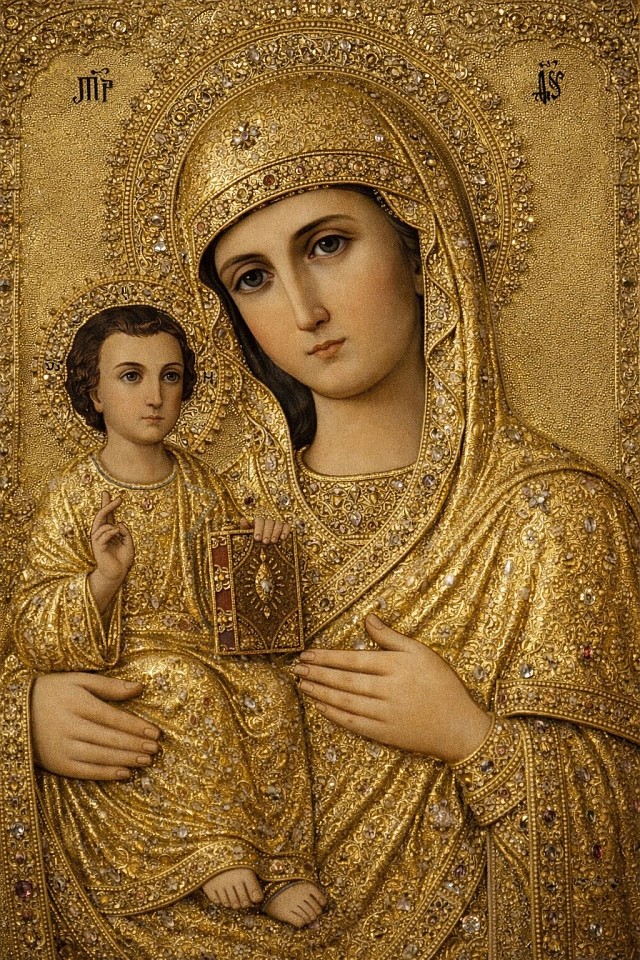
Our Hesychastion is named after the icon of the Most Holy Theotokos Dexiokratousa (Greek: Δεξιοκρατοῦσα, literally “holding on the right hand”), known in the Slavic tradition in its depiction as the Pravoruchitsa.
Her feast day is celebrated on January 25 (January 12 in the Old Calendar).
The Most Holy Theotokos holds Christ on her right hand as the One through whom He was manifested to the world in the flesh, thereby signifying that the Son born of Her is the same One who, by His divinity, sits at the right hand of the Father — the King, the Judge, and the Savior, strengthening the faithful in the path of prayer and interior spiritual labor.
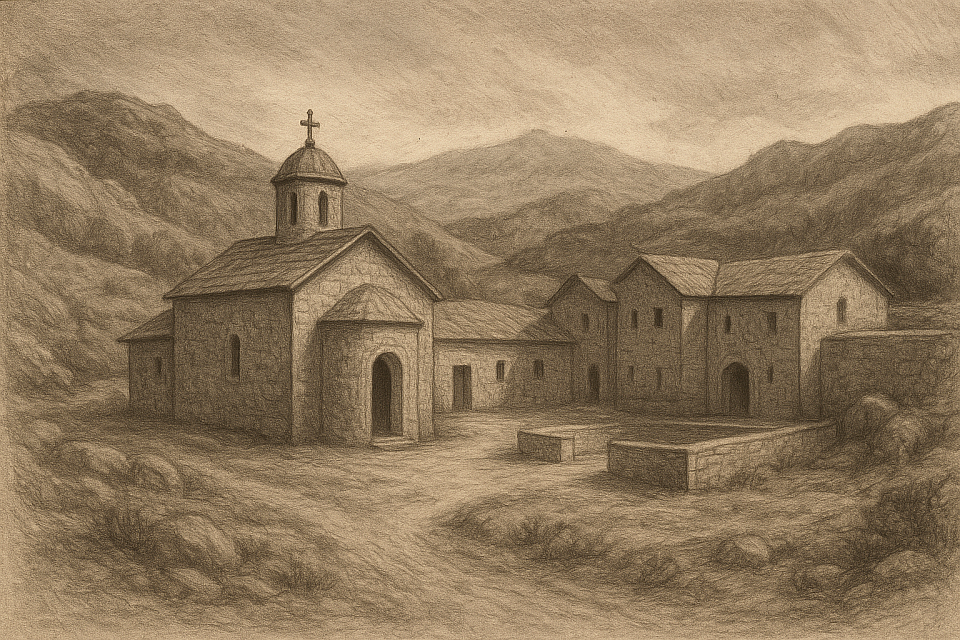
A Hesychasterion is a secluded place of prayer where the practice of hesychasm is carried out.
Hesychasm (from Greek ἡσυχία — repose, silence, stillness) is a path of inner purification, spiritual asceticism, and unceasing prayer, the goal of which is the knowledge of God and the attainment of theosis — the union of man with God.
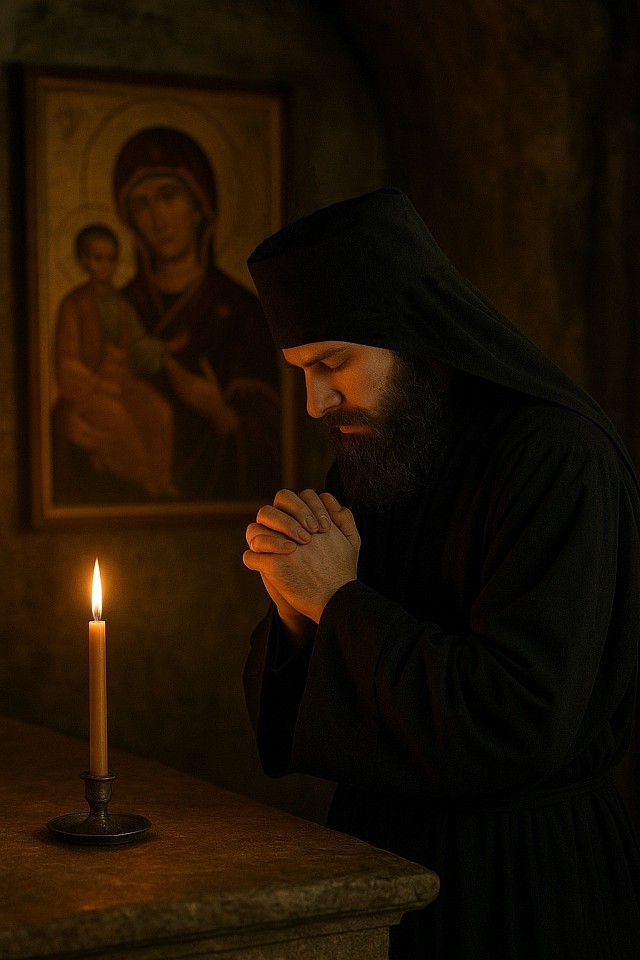
Here, monks strive in accordance with the Hesychast rule and the tradition of the Athonite elders, abiding in spiritual and canonical unity with the Universal Orthodox Church.
Each ascetic seeks strict obedience, the purification of the heart from passions, and the continual discernment of grace from delusion, mindful of the words of the Apocalypse that nothing unclean can enter the Kingdom of God (Rev. 21:27).
In the silence of the cell, in the humility of spirit, and through uninterrupted attention to God in obedience, the monk perceives the beginning of the Kingdom of Heaven descending into the purified heart, experiencing its presence already on earth, as the Lord Himself said: “The Kingdom of God is within you” (Luke 17:21).
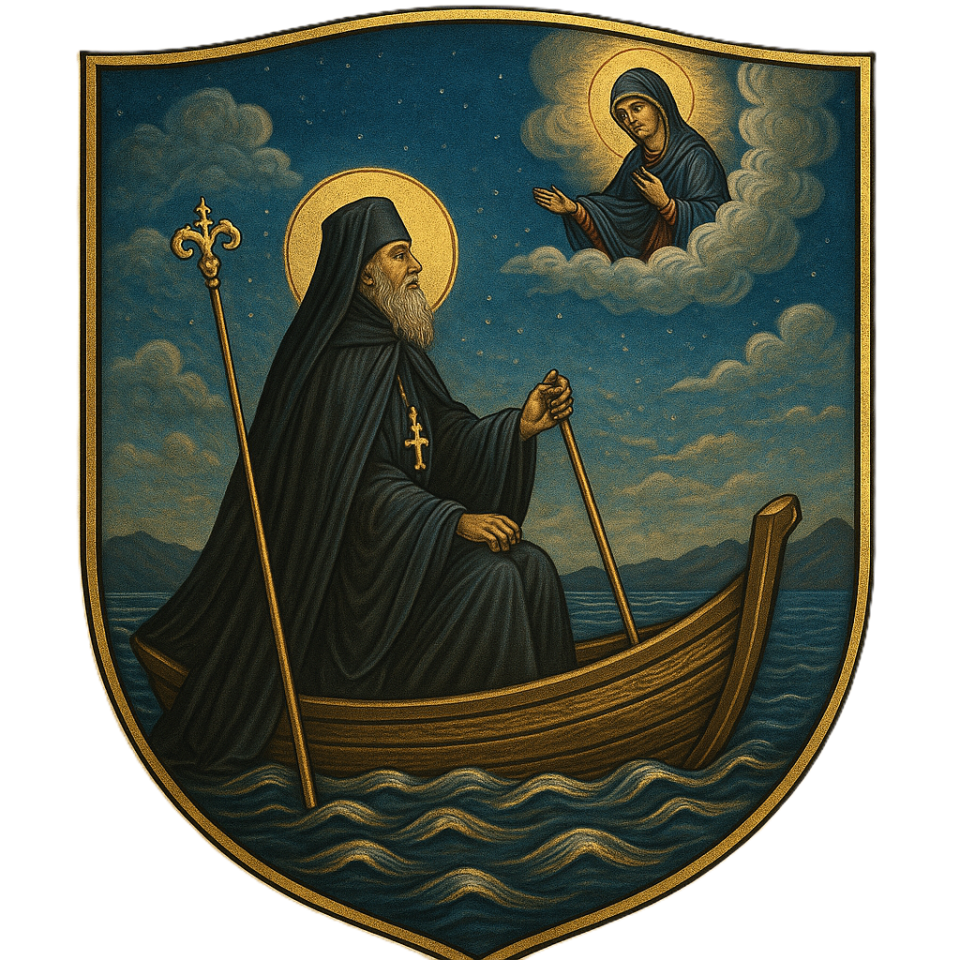
By the blessing of a canonical bishop, the Hesychasterion follows an idiorrhythmic form of governance, which in Greek (ἰδιόρρυθμον) means “having its own rule, order, and rhythm.”
It remains under the spiritual guidance of the hierarch who blessed this way of life.
This way of life, rooted in the tradition of Athonite monasteries, sketes, cells, and hesychasteria, unites common prayer with the personal ascetic labor of each brother and preserves the spirit of quietness, watchfulness, noetic prayer, and inner obedience in Christ, characteristic of the ancient idiorrhythmic tradition of the Holy Mountain.
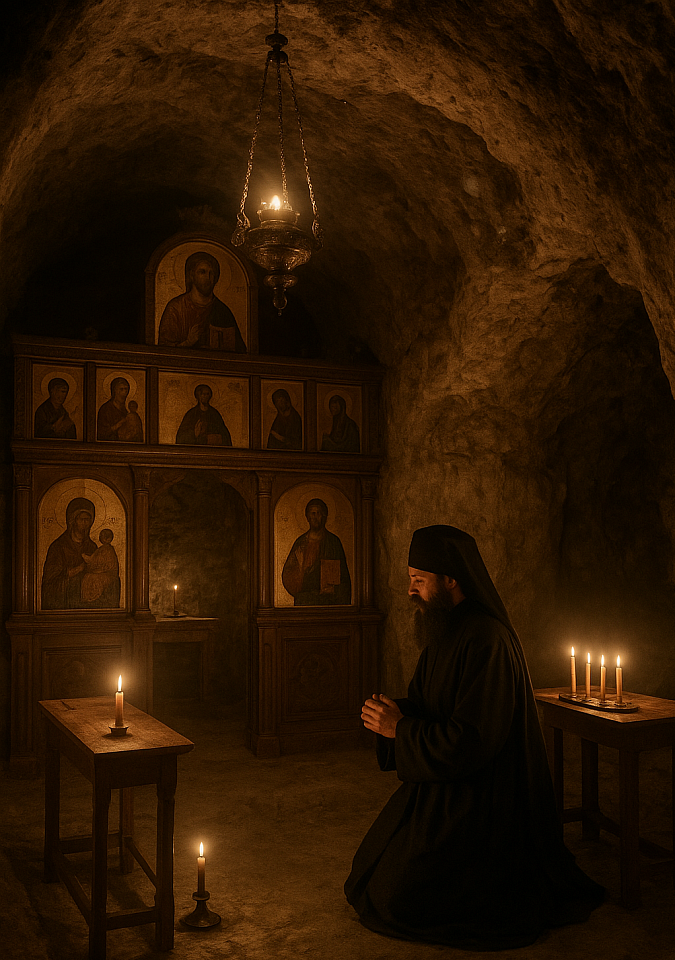
The Hesychasterion is closed to worldly visitors and lives in spiritual seclusion, dedicating itself to prayer and inner spiritual labor.
The purpose of this seclusion, both in the present age and in antiquity, is multifaceted and deeply personal — the search for inner meaning, peace, and spiritual purification.
In an era of "information noise" and constant external activity, spiritual seclusion becomes a radical means of preserving inner silence — hesychia, in which the heart is united with God.
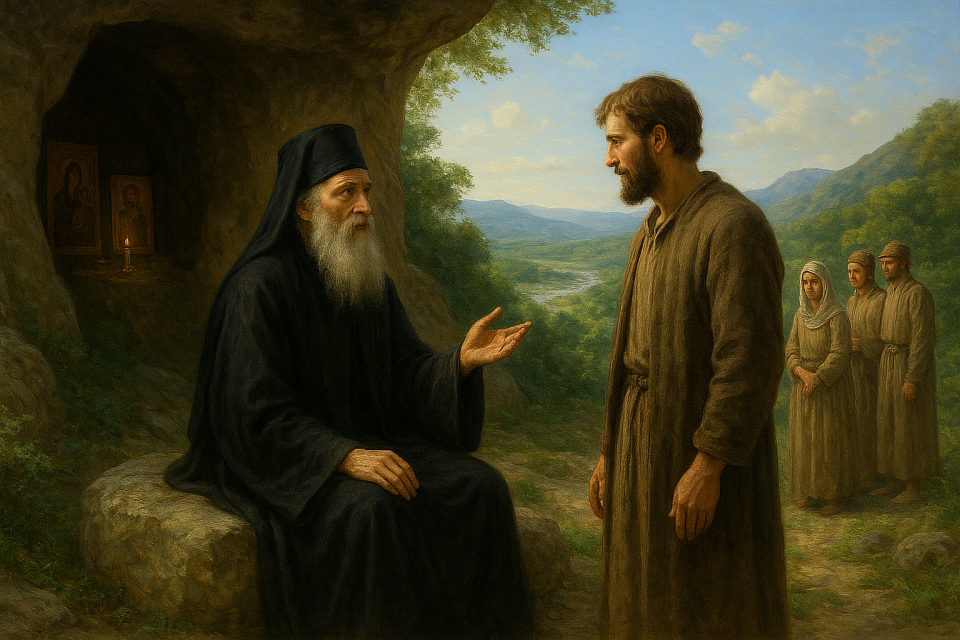
In ancient times, even hermits and recluses received those who came to them with requests for prayers.
Now, by blessing, our Hesychasterion is open for spiritual correspondence: letters with petitions may be sent via
✉ Contacts.
The monastery will provide an official response within one month.
☙ ✥ ❧
The Rule of the Hesychasterion of Panagia Dexiokratousis
1. Foundation of the Monastery
The Hesychasterion was founded with the blessing of a canonical hierarch as a place for schemamonks, for prayerful silence, repentance, and the ceaseless Jesus Prayer, following the example of the Holy Mount Athos.
The life of the brotherhood is directed toward the acquisition of the Holy Spirit through obedience, watchfulness, and prayer of the mind and heart.
2. Spiritual Orientation
The monastery follows the tradition of the holy fathers of Hesychasm — venerable Gregory Palamas, Joseph the Hesychast, Ephrem of Katounakia, and other bearers of the Athonite patristic tradition.
The principal path is unceasing prayer of the heart and the preservation of inner stillness.
3. Organization of Life
The Hesychasterion follows an idiorrhythmic rule, which means that each brother undertakes a personal prayerful obedience while remaining in spiritual unity with the abbot and the entire brotherhood.
Communal worship is performed on designated days and feasts, while at other times life is carried out in obedience, solitude, and prayer.
4. Seclusion of the Monastery
The monastery is closed to secular visitors.
Acceptance of guests is possible only by special blessing.The primary work of the brotherhood is prayer for the world and for all who seek intercession.
5. Relation to the World
We do not participate in public, political, or commercial activity.All service is spiritual, carried out in silence, with the love of Christ for every person, free from judgment or disputes.
6. Prayer Rule
Each brother daily prays the Jesus Prayer, reads the Hours and Psalms, observes the daily cycle of divine services, participates in the Holy Liturgy, and keeps fasting and silence according to his strength.
The main rule is not external form, but the preservation of attention in the heart.
7. Vows and Guidance
Obedience, non-possession, and chastity are observed according to the monastic order.The abbot bears spiritual responsibility for the brotherhood and is guided by the Gospel, the canons of the Holy Fathers, and the blessing of the canonical bishop.
8. Relation to the Church
The Hesychasterion remains in canonical and Eucharistic unity with the Ecumenical Orthodox Church through the primate of the Most Holy Ecumenical Patriarch.
Appendix.
On Spiritual Continuity and Conformity with the Athonite Charter
The Isychastirion of the Most Holy Theotokos Dexiokratusa preserves the inner order, spiritual structure, and prayerful way of life founded upon the sacred tradition and spirit of the Holy Mount Athos, as set forth in the Charter (Χάρτης του Αγίου Όρους Άθω) of the Holy Mountain, ratified by the Holy Community (Sacra Kinotis) and the Ecumenical Patriarchate of Constantinople, and incorporated into the Constitution of the Hellenic Republic (Article 105).
In the manner of the monasteries of the Holy Mountain, the Isychastirion maintains:
— the spirit of stillness and ceaseless Jesus Prayer;
— the order of obedience, chastity, and non-possessiveness;
— the inner unity of the brethren in Christ;
— Eucharistic communion with the One, Holy, Catholic and Apostolic Church.
Our Rule is received in the spirit of the Athonite tradition, preserving the living breath of the patristic heritage manifested in the holy hesychasts — St. Gregory Palamas, Elder Joseph the Hesychast, Elder Ephraim of Katounakia, and others, through whom the Holy Spirit acted in the fullness of truth.
“Mount Athos is an image of Heaven upon the earth, where the grace of God abides; and whoever follows its order in spirit and in truth becomes a partaker of the same grace.” (St. Gregory Palamas, Homily on Divine Stillness)
The Isychastirion, embracing the spiritual heritage of the Holy Mount Athos, seeks not outward imitation, but the preservation of its inner path of hesychastic life, confirmed and sanctified within the Universal Orthodox Church.
Link to the Charter of the Holy Mount Athos:
☙ ✥ ❧
Useful Links:
- Ecumenical Patriarchate - https://ec-patr.org/
- Official website of the Holy Great Monastery of Vatopedi - https://www.vatopedi.gr
- Orthodox Skete of Kent (UK) - https://www.schitulortodoxdinkent.com/
- Monastery of Saint Gregory Palamas - https://sgpm.goarch.org/Monastery/
- Orthodox Skete of Saint Roman - https://stromanos.org
- Monastery of Our Lady and Saint Laurence (Orthodox Monks living under the Rule of Saint Benedict ) - https://www.ladyminster.com/
- Holy Assumption Women’s Monastery - https://www.holyassumptionmonastery.com/
- Romanian Skete of Prodromos (Romanian Skete of Saint John the Baptist) - https://prodromu-athos.ro/